
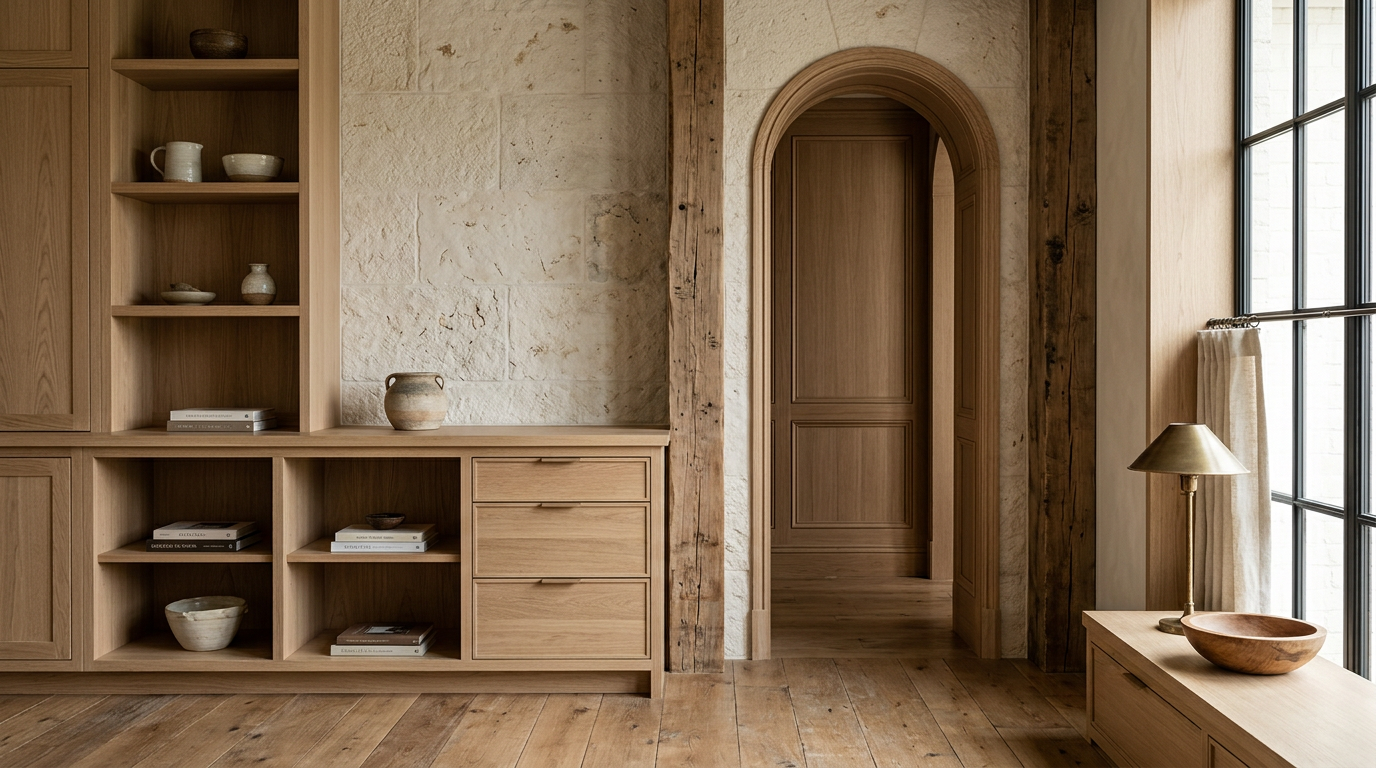
Some homes make an immediate impression. Others leave a lasting one.
A dramatic kitchen with the latest finishes, bold lighting, and fashionable materials may look spectacular in photographs. But will those same design choices appeal to buyers ten years from now?
Meanwhile, a home with thoughtful proportions, beautiful natural light, and exceptional architectural detailing may remain desirable long after its finishes have changed.
For Silicon Valley homeowners considering renovations—or preparing to sell—this raises an important question:
Does timeless architecture create more lasting value than trendy design?
The answer begins with understanding the difference between what attracts attention today and what may continue to appeal tomorrow.
Architecture and Interior Design Aren’t the Same Thing
Architecture establishes the fundamental character of a home.
It determines how spaces relate to one another, how natural light enters, how the building connects with its surroundings, and how comfortably the property functions.
Interior design influences how those spaces look and feel through materials, colors, lighting, furnishings, and finishes.
Both contribute to a home’s appeal.
But they aren’t equally easy to change.
Replacing a fashionable backsplash is relatively straightforward. Correcting poor proportions, awkward circulation, or inadequate natural light can be considerably more complicated and expensive.
The most enduring qualities of a home are often the ones built into its architecture.
What Makes Architecture Timeless?
Timeless architecture isn’t limited to one particular style.
A beautifully executed Craftsman, mid-century modern, Spanish Revival, or contemporary residence can all possess lasting architectural appeal.
What matters is the quality of the design.
Thoughtful proportions, natural light, functional layouts, quality materials, and a harmonious relationship between the home and its setting can create an experience that transcends decorating trends.
In Silicon Valley communities such as Los Gatos, Saratoga, and Monte Sereno, buyers may encounter homes representing several architectural periods.
A property’s appeal often depends less on whether its style is currently fashionable and more on how successfully that style has been executed.
Why Trendy Renovations Can Be Risky
Design trends can be exciting.
They bring fresh ideas, new materials, and evolving ways of using residential space.
But trends also change.
A highly distinctive kitchen color, elaborate decorative finish, or unusually personalized bathroom may appeal strongly to today’s homeowner without appealing equally to tomorrow’s buyer.
That doesn’t mean homeowners should avoid trends altogether.
It means distinguishing between design choices made for personal enjoyment and improvements intended to support resale value.
The two goals don’t always produce the same decisions.
The Kitchen: Where Trends and Value Collide
Kitchens are among the most visible spaces in real estate marketing.
Beautiful cabinetry, quality appliances, thoughtful storage, and efficient layouts can contribute meaningfully to a home’s appeal.
But an expensive kitchen renovation doesn’t automatically produce an equivalent increase in market value.
The same applies to bathrooms.
Buyers may appreciate updated finishes, but they also evaluate functionality, workmanship, maintenance requirements, and how the improvements relate to the rest of the home.
A well-executed renovation that respects the architecture may have broader appeal than one driven entirely by current fashion.
The goal should be a cohesive home—not a collection of competing design statements.
Authenticity Can Be More Valuable Than Imitation
One mistake homeowners sometimes make is trying to force a property into an architectural identity it doesn’t naturally possess.
A traditional home remodeled to imitate a minimalist contemporary residence may lose some of its original character without achieving the architectural integrity of a purpose-designed modern home.
Similarly, stripping distinctive details from a well-preserved mid-century property may diminish features that certain buyers specifically value.
This doesn’t mean every original feature should be preserved.
Older homes may need substantial updates for safety, comfort, energy efficiency, and functionality.
But thoughtful renovation considers what makes the property distinctive before deciding what to change.
Quality Matters More Than Fashion
Materials and craftsmanship can have a lasting influence on how a home is perceived.
Well-executed millwork, appropriately selected stone, durable flooring, quality windows, and carefully considered lighting can contribute to an enduring sense of quality.
However, expensive materials aren’t automatically better.
A costly finish that’s poorly installed, difficult to maintain, or inconsistent with the home’s architecture may add less appeal than a simpler material used beautifully.
Luxury isn’t merely the cost of the materials. It’s the quality of the decisions behind them.
What About Contemporary Architecture?
Timeless doesn’t mean traditional.
A contemporary home can be architecturally enduring when its design emphasizes proportion, natural light, functionality, quality construction, and a thoughtful connection to the site.
Likewise, a traditional home can feel dated if its layout no longer meets contemporary expectations.
The distinction isn’t old versus new.
It’s lasting design quality versus short-lived novelty.
Which Improvements May Support Long-Term Appeal?
For homeowners considering renovations, some improvements deserve particular attention.
Functional floor plans, well-maintained building systems, quality windows, natural light, practical storage, and inviting indoor-outdoor connections can contribute to everyday livability.
These characteristics may appeal to a broad range of buyers without depending heavily on a specific decorating trend.
However, the financial return from any improvement depends on the property, renovation cost, workmanship, buyer preferences, and market conditions.
Before undertaking a major project specifically for resale, consult a knowledgeable local real estate professional about what buyers currently value in your particular market.
Sellers: Presentation Should Respect the Architecture
When preparing a home for sale, the objective isn’t necessarily to make every property look identical.
A thoughtfully preserved Craftsman should not be staged exactly like a minimalist contemporary residence.
Furniture, artwork, lighting, and accessories should complement the home’s architectural character.
For distinctive properties, professional photography should emphasize proportions, materials, natural light, and spatial relationships—not simply fashionable furnishings.
The best marketing helps buyers recognize what makes the home compelling beyond its decorative finishes.
The Bottom Line
Trendy design can generate excitement, but timeless architecture often provides the stronger foundation for enduring appeal.
That doesn’t mean every architecturally distinctive property will outperform the market, or that contemporary design trends lack value.
It means that quality, authenticity, functionality, and thoughtful design tend to matter more than novelty alone.
For Silicon Valley homeowners, the most effective approach is often to preserve or improve the home’s architectural strengths while introducing updated finishes that complement its character.
Trends can make a home feel current. Great architecture can make it feel relevant for decades.
Buying, Renovating, or Selling a Distinctive Silicon Valley Home?
I’m Margaret Shendal, Broker Associate with The Agency (DRE #01464329).
With a background in interior design and experience in luxury real estate, I bring an appreciation for architecture, design, and thoughtful property positioning to the buying and selling process.
I work with homeowners and buyers throughout Los Gatos, Saratoga, Monte Sereno, Campbell, San Jose, and Santa Clara County.
If you’re considering selling a distinctive property or evaluating improvements before listing, contact me for a confidential consultation about its market positioning and potential.
Compliance Disclaimer
This article is provided for general informational and educational purposes only and does not constitute legal, tax, financial, investment, architectural, construction, or appraisal advice. Design preferences, renovation costs, property values, and market conditions vary. Architectural quality, materials, and improvements do not guarantee increased value, appreciation, or resale performance. Homeowners should consult qualified real estate, architectural, construction, appraisal, and other professionals regarding their specific circumstances.
Leave a Reply