
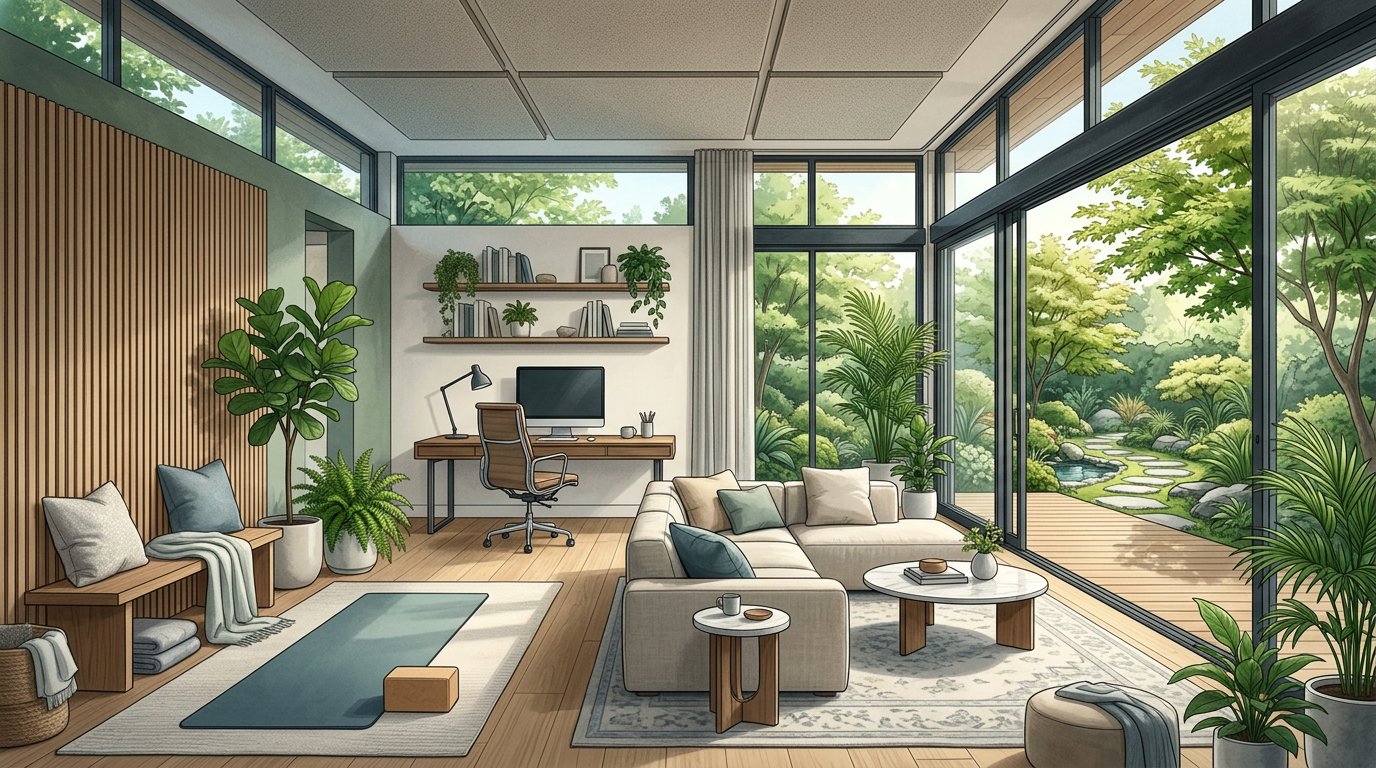
What will a truly exceptional Silicon Valley home look like in 2030?
Will luxury still be measured by square footage, dramatic entryways, and expensive finishes? Or will the next generation of affluent buyers place greater importance on intelligent design, privacy, sustainability, and the ability of a home to adapt to changing lifestyles?
In communities such as Los Gatos, Saratoga, and Monte Sereno, luxury has never been defined by price alone.
As technology evolves and buyer priorities shift, the distinction between an expensive home and an exceptional one may become even more pronounced.
By 2030, the most desirable luxury properties may be those that combine timeless architecture with sophisticated, practical innovation.
1. Architectural Quality Will Still Matter
Technology changes quickly. Great architecture tends to have a longer life.
Thoughtful proportions, natural light, functional floor plans, quality construction, and a harmonious relationship between indoor and outdoor spaces are likely to remain important.
A beautifully designed home can accommodate changing finishes, furnishings, and technologies without losing its essential character.
For buyers evaluating multimillion-dollar properties, architectural integrity may become an increasingly important distinction between homes designed for lasting appeal and those built primarily around current trends.
The future of luxury may be less about architectural extravagance and more about architectural intelligence.
2. Smart Homes Will Need to Be Truly Smart
By 2030, sophisticated home technology may be expected rather than exceptional.
Integrated lighting, climate control, security, automated shades, and energy management are already familiar features in many luxury properties.
The next step is likely to be systems that work together more intuitively.
Artificial intelligence may help homeowners manage energy consumption, adjust environmental settings, monitor equipment performance, and simplify daily routines.
But complexity isn’t necessarily luxury.
A home filled with incompatible devices, outdated software, or difficult-to-maintain systems can create frustration.
The premium experience will be technology that works quietly, reliably, and securely in the background.
3. Energy Resilience May Become a Luxury Essential
Energy efficiency has traditionally been associated with lower operating costs and environmental considerations.
Increasingly, it may also be associated with comfort, convenience, and resilience.
Solar generation, battery storage, efficient heating and cooling, improved insulation, and electric vehicle charging infrastructure may become more prominent in luxury-home evaluations.
In California, where electricity costs, grid reliability, and climate-related concerns can influence ownership decisions, the ability to manage energy use may be especially appealing.
However, system performance, installation costs, maintenance, utility policies, and financial benefits vary.
The most desirable properties may be those where energy systems are thoughtfully integrated into the architecture rather than added as disconnected upgrades.
4. Privacy Will Become Even More Valuable
In an increasingly connected world, privacy may become one of the most meaningful luxury amenities.
That includes physical privacy: generous setbacks, mature landscaping, thoughtful window placement, and outdoor spaces protected from neighboring views.
But it also includes digital privacy.
As homes incorporate more connected devices, buyers may pay greater attention to cybersecurity, data collection, network reliability, and control over personal information.
A premium property in 2030 may offer both a secluded physical environment and technology designed with privacy in mind.
In established communities such as Monte Sereno and Saratoga, exceptional parcels that provide natural privacy may remain particularly compelling.
5. Wellness Will Influence Residential Design
The idea of wellness-oriented housing is evolving beyond dedicated gyms and elaborate spa bathrooms.
Future luxury buyers may place greater emphasis on the quality of the everyday living environment.
Natural light, ventilation, acoustic comfort, temperature control, indoor air quality, and access to outdoor spaces can contribute to a more comfortable home.
Dedicated fitness or relaxation areas may appeal to some buyers, but wellness-focused design doesn’t necessarily require specialized rooms.
Sometimes the most sophisticated feature is a home that feels calm, comfortable, and connected to its surroundings.
Luxury may increasingly be measured by how well a home supports daily living—not simply how impressive it looks.
6. Flexible Spaces Will Outperform Rigid Floor Plans
The way people use their homes continues to evolve.
Remote and hybrid work, multigenerational living, changing household needs, and new technologies can all influence residential design.
By 2030, flexible spaces may become an even more important consideration.
A thoughtfully designed room might function as a home office today, a guest suite tomorrow, or a creative studio in the future.
Properties with adaptable layouts may offer advantages over homes dominated by highly specialized spaces that are difficult to repurpose.
For luxury buyers, flexibility can mean preserving options without sacrificing architectural quality.
7. Exceptional Land Will Remain Difficult to Replicate
Technology can be upgraded. Interiors can be redesigned.
But a property’s location, setting, and fundamental land characteristics are far less easily changed.
A generous, usable parcel with privacy, attractive views, mature landscaping, and appealing outdoor living opportunities may continue to distinguish luxury properties.
This is particularly relevant in Silicon Valley, where desirable land in established communities is limited.
By 2030, the relationship between a home and its landscape may be just as important as the interior architecture.
But buyers will still need to evaluate topography, drainage, maintenance, wildfire exposure, and development restrictions.
The value of land lies in its quality and utility—not simply its acreage.
8. Climate-Conscious Design Will Influence Buyer Decisions
Future luxury buyers may place greater importance on how a property responds to environmental conditions.
In California, that could include wildfire-conscious landscaping, appropriate building materials, effective drainage, efficient cooling, and carefully designed outdoor spaces.
Insurance availability and ownership costs may also influence purchasing decisions.
A beautiful home that is difficult or expensive to insure may present a different ownership proposition from one with thoughtfully managed risks.
No design feature can eliminate exposure to natural hazards, but careful planning and documented improvements may help buyers better understand a property’s resilience.
9. Timeless Design May Matter More Than Trendy Finishes
Luxury interiors will undoubtedly continue to evolve.
But the most enduring properties may avoid becoming overly dependent on a particular design moment.
Quality materials, excellent craftsmanship, coherent architectural detailing, and well-considered proportions can provide a foundation for future updates.
That doesn’t mean every luxury home should look neutral or conventional.
Distinctive architecture and individual character can be valuable.
The important distinction is between thoughtful originality and short-lived novelty.
What Does This Mean for Today’s Buyers and Sellers?
For buyers, thinking about 2030 means evaluating more than a property’s current appearance.
Consider the quality of its architecture, flexibility of its floor plan, land characteristics, infrastructure, and the practicality of future improvements.
For sellers, preparing a luxury home for market doesn’t necessarily mean installing every emerging technology or following every design trend.
The better strategy may be to identify improvements that complement the property’s existing strengths and align with the expectations of its likely buyer pool.
Not every upgrade will produce a financial return, and future preferences remain uncertain.
The Bottom Line
The Silicon Valley luxury home of 2030 may be defined by a more sophisticated understanding of what makes a property exceptional.
Less emphasis on sheer size.
More emphasis on quality, adaptability, privacy, resilience, and thoughtful technology.
Above all, the most compelling luxury homes may be those that combine enduring architectural qualities with the flexibility to accommodate the future.
Because true luxury isn’t simply having more.
It’s having a home that lives exceptionally well.
Buying or Selling a Luxury Home in Silicon Valley?
I’m Margaret Shendal, Broker Associate with The Agency (DRE #01464329).
With a background in interior design and experience in luxury real estate, I bring an appreciation for architecture, design, and thoughtful property positioning to the buying and selling process.
I work with clients throughout Los Gatos, Saratoga, Monte Sereno, Campbell, San Jose, and Santa Clara County.
If you’re considering buying, selling, or preparing a distinctive Silicon Valley property for the next generation of luxury buyers, contact me for a confidential consultation.
Compliance Disclaimer
This article is provided for general informational and educational purposes only and does not constitute legal, tax, financial, investment, architectural, engineering, insurance, or appraisal advice. Statements about 2030 reflect possible market and design developments rather than guaranteed forecasts. Technology, buyer preferences, regulations, costs, and property values may change. Buyers and sellers should consult qualified professionals regarding their specific circumstances.
Leave a Reply